Alabama Women's Hall of Fame
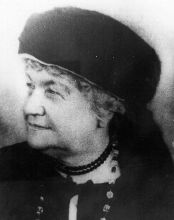
Elizabeth Johnston, called "Johnsie" by beloved ones and friends, was the granddaughter of the rich and powerful Governor of North Carolina, John Mottey Moorehead.
In 1870, she married General Robert D. Johnston. The family moved to Birmingham in 1887. Mr. Johnston became the president of the First National Bank.
Mrs. Johnston was a deeply religious person. In Birmingham, she was active in the religious and civic functions. She became a charter member of the South Highland Presbyterian Church. She was the founder of the Highland Book Club, and the Vice Regent for Alabama to the Mount Vernon Association.
For ten years every Sunday afternoon, Mrs. Johnston went to the Mulga-Palos Mines prison camp. Being disturbed by the law in some cases and wanting to correct such wrongs which she found, she solicited the support from women's organizations and civic clubs concerning the importance of remedial education for boys rather than punishment.
The Alabama Federation of Women's Clubs appointed Mrs. Johnston chairman of a committee to investigate the possibility of a school for young offenders. Following this investigation, she decided that a school of opportunity where boys who had gone astray could be reclaimed through the power of love to become good citizens was needed. She wanted a self-perpetuating Board of Women, mothers of boys, who had leisure time to give to the school. She wanted politics kept out and the Bible kept in. She prepared a bill and went before the State Legislature to ask for funds which would establish the school. The bill did pass without any problems, and the Alabama Boys Industrial School was established.
Alabama established a board of women directors for the school, the first of its kind for a state institution in the United States, and Mrs. Johnston became the president of the Board of Directors and remained so until her death. The school was located in the Roebuck area of Birmingham, and was opened in 1899 in a cabin on the property with five little boys from the police court in Birmingham.
The school's creation was a heroic performance which only a woman with an inexhaustible store of courage, energy, and love such as Mrs. Johnston could achieve.
Mrs. Johnston lived on the campus of the industrial School in a house which has been called "Little Mount Vernon", so named because she was a Regent of Washington's home at Mount Vernon. Mrs. Johnston was a surrogate mother to the boys and addressed them as "Son." No bars or locks were permitted on the dormitory doors or windows and the school could have no prison atmosphere. In the 1920's, the Industrial School was a model for state reformatories all over the United States.
Bibliography
Avery, Mary Johnston. She Heard with her Heart. Birmingham: Birmingham Publishing, 1944.
“Founder of Boys School in City Is Called by Death.” Birmingham News, 21 December 1934.
Moore, Albert Burton. History of Alabama. Chicago: American Historical Society, 1927.
“Mrs. R.D. Johnston.” Birmingham Age-Herald, 24 December 1934.
“Noted Alabama Woman Expires.” Birmingham Age-Herald, 21 December 1934.
“One Who Conferred a Blessing on Alabama.” Birmingham News, 24 December 1934.
Owen, Thomas McAdory. History of Alabama and Dictionary of Alabama Biography. Vol. 4. Chicago: The S.J. Clark Publishing Company, 1921.
“Schooling Library.” Boys Banner, 1954. N.p.
Walker, Alyce Billings. “From Young Girl’s Vow Stems Life of Mercy.” Birmingham News, 9 April 1944.
 Other Inductees
Alabama Women's Hall of Fame