
Alabama Women's Hall of Fame
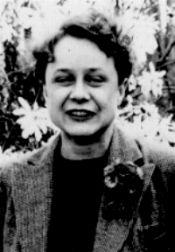
Lella Warren was born in Clayton, Alabama, however, when she was still a small child, her family moved away. By the time Lella was thirteen, the Warrens had settled in Washington, D.C. There she attended George Washington University and Goucher College before graduating from GWU. In 1926, her first novel, A Touch of the Earth, was published, and its success enabled her to make a living during the 1920s and 1930s as a writer of short stories, features, and advertising copy. In 1927, she turned to her family and her birthplace for her subject matter and began research for a novel about the settling of Alabama. With an advance from Alfred A. Knopf, Inc., she returned to Clayton in 1936 to have access to Barbour County records and diaries and letters of relatives and friends.
In September 1940, the publishers released Foundation Stone, the story of the Whetstone family and of Alabama's development from 1820s through the 1860s. The success of this novel was immediate, with many reviewers praising the work for its effective portrayal of the "true South" of pioneers and wilderness. After months on the bestseller lists in the United States, Foundation Stone was published in Great Britain and translated into Swedish, Danish, and Portuguese. The Women's National Press Club recognized Warren as a woman of the year and received the George Washington University Alumni Award for notable Achievement in literature.
Warren originally planned her story of the Whetstone trilogy. Thus after briefly enjoying the success of Foundation Stone, she bean work on its sequel. In 1952, Whetstone Walls was released. It tells the story of the descendants of the Whetstone pioneers, who leave Alabama to pursue careers in medicine and law, but, like Warren, frequently return home for revitalization.
Although Warren wrote for another thirty years, all of her later short stories and novels about Alabama are unpublished. She was working on the third novel of the trilogy when she died of cancer in 1982.
Late in life, Warren wistfully wrote, since she could not visit Clayton, "I simply have to keep ‘Mr. Clayton' undemolished in my mind." She has done more than preserve her birthplace in her memory. In her writing, she has effectively captured Alabama - its land, its history, and its people.
Bibliography
Anderson, Nancy ed.. Family Fiction: Unpublished Naratives. Birmingham: Summa Publications, 1989.
Warren, Lella. Foundation Stone. New York: Knopf, 1940.
----. A Touch of Earth. New York: Simon and Schuster, 1926.
----. Whetstone Walls. New York: Appleton-Century-Crofts, 1952.
 Other Inductees
Alabama Women's Hall of Fame