
Alabama Women's Hall of Fame
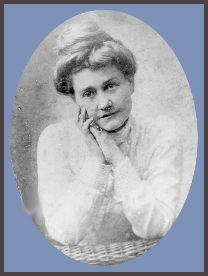
Martha Strudwick Young was born in Newbern, Alabama in 1862. When she was a young child, her family moved to nearby Greensboro. In that small Black Belt town, she learned Southern Black Legends and folk tales which she used later as the basis for her fiction. She was educated at Greensboro Female Academy, Green Springs School (begun by her grandfather, Henry Tutwiler), Tuscaloosa Female Academy, and Livingston Female Academy (later Livingston University, now the University of West Alabama).
While caring for her brothers and sisters, she began to write short stories in Negro dialect. Her first published story, "A Nurse's Tale," appeared in the New Orleans Times-Democrat in December 1884 under the name Eli Shepperd. This pseudonym she used until the publication of her first book, Plantation Songs, in 1901. In 1902, her second book, Plantation Bird Legends, gained her recognition as a major Southern literary figure and assured her a place among America's foremost dialect writers.
From 1884 until 1936, Martha Young's stories appeared in newspapers and journals throughout the United States, including Woman's Home Companion, Metropolitan Magazine, Christian Advocate, Southern Churchman, Southern Bivouac, and Cosmopolitan. After the publication of Behind the Dark Pines in 1912, she was compared by many reviewers to Joel Chandler Harris, the recognized master of the Black dialect, with whom she collaborated on one occasion. She wrote children's books, well received by literary critics, and toured the nation reading her folk tales and lecturing to audiences.
As she grew older, Miss Young delighted in strolling about Greensboro. Spotting her on one such occasion, a local newspaper reporter wrote, "There passes by our window a distinguished citizen and one of whom we are all proud - Miss Martha Young. She is a native product who has gained national fame as an author. . . The Watchman takes pleasure in paying tribute to this distinguished citizen."
Miss Young died in Greensboro shortly after those editorial comments were published. During a life which bridged two centuries, she recorded a rapidly disappearing culture, preserving it as a heritage for future generations.
 Other Inductees
Alabama Women's Hall of Fame